


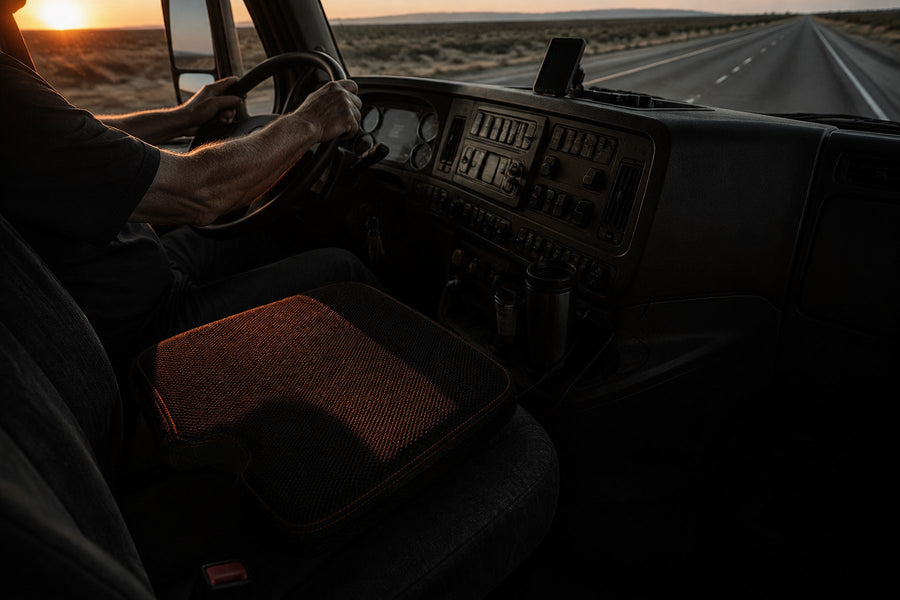
OTR long-haul
Eleven hours down and your shirt is still dry. Chilled air at the skin, not a fan pushing cab heat around.

Free shipping on DriverCool
•
60-day full-dispatch trial
•
Runs on 12V with the engine off
•

Ardora DriverCool™: Chilled Air Seat Cushion with Under Seat Chiller

A chilled-air seat cushion with the chiller strapped under the seat, so the cooling reaches you and none of the hardware does.
A ventilated cushion blows cab air at you. If the cab is 32 degrees, so is the air. DriverCool chills the air first, then delivers it at the seat surface, so you stay cool and dry through a full shift with the engine off.
Layer order is the whole product. The air path sits directly under the cover where it can reach you, and the foam sits underneath it, where insulating is useful because it stops you cooling the truck seat instead of yourself.
| 1. Breathable mesh cover | 3 mm open knit, zips off |
|---|---|
| 2. Perforated diffuser | 1.5 mm, spreads air evenly |
| 3. Spacer air matrix | 6 mm, crush resistant under load |
| 4. Support foam core | 28 mm high resilience |
| 5. Non slip base | 1.5 mm woven, silicone dots |
| Airflow | 6 to 8 CFM (10 to 14 m³/h)Target |
|---|---|
| Temperature drop | Up to 10 °C below cab inlet airTarget |
| Noise | Inaudible at highway speedTarget |
| Power draw | 0.8 A / 10 W eco, 5.4 A / 65 W max |
| Voltage range | 9 to 32 V DC, 12 V and 24 V trucks |
| Module weight | 2.5 kg (5.5 lb) |
| Cushion size | 450 × 420 × 40 mm (17.7 × 16.5 × 1.6 in) |
| Cushion weight | 1.4 kg (3.1 lb) |
| Duct port | Flat oval, 40 × 15 mm |
Figures marked target are engineering targets. Performance varies with cab temperature, humidity and operating mode. Measured figures get published here after road validation.
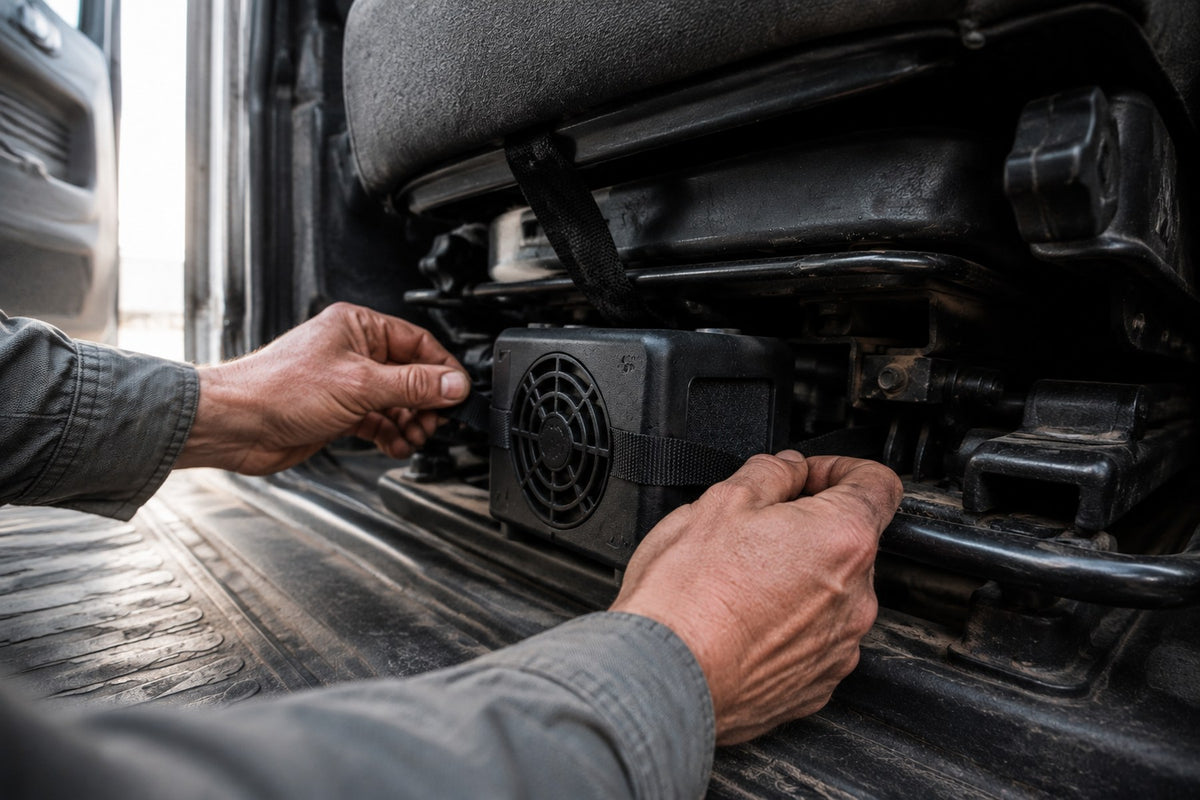
The module straps to the seat pedestal with a nylon strap. Nothing is drilled, cut or permanently altered, so it comes out as cleanly as it went in when you change trucks.
The duct exits the rear of the cushion, turns down through a 90 degree elbow and runs behind the seat. The service loop is cut long enough for the full travel of an air suspension seat, so it does not tug at the top of a bounce.
Power is a 12 V plug. If your accessory socket is already busy, wire it to a spare fused circuit instead.
Free shipping on DriverCool, to your house, your terminal or a UPS Access Point.
60 day trial. Run it through a real stretch of hot weather. If it does not earn its place in the cab, send it back.
The cushion and the module separate, so a returned unit can be refurbished with a fresh cover rather than scrapped.
Why it is built this way
Every cooling cushion has to move roughly 50 watts of heat away from where you sit. There are two ways to try. Run the numbers honestly and one of them is not close.
4 W
Conduction through foam
Put a chilled layer under a foam pad and the foam is the problem. Foam is an insulator, the same material a thermos uses on purpose. A 10 mm layer passes about four watts. That is inside the noise of simply sitting on a different chair.
50 to 75 W
Chilled air plus evaporation
Cold, dry air at the skin does two jobs at once. It carries heat away because it is cold, and it evaporates sweat, which moves far more heat than conduction ever will. Evaporation is the only mechanism here that can take skin below the air temperature.

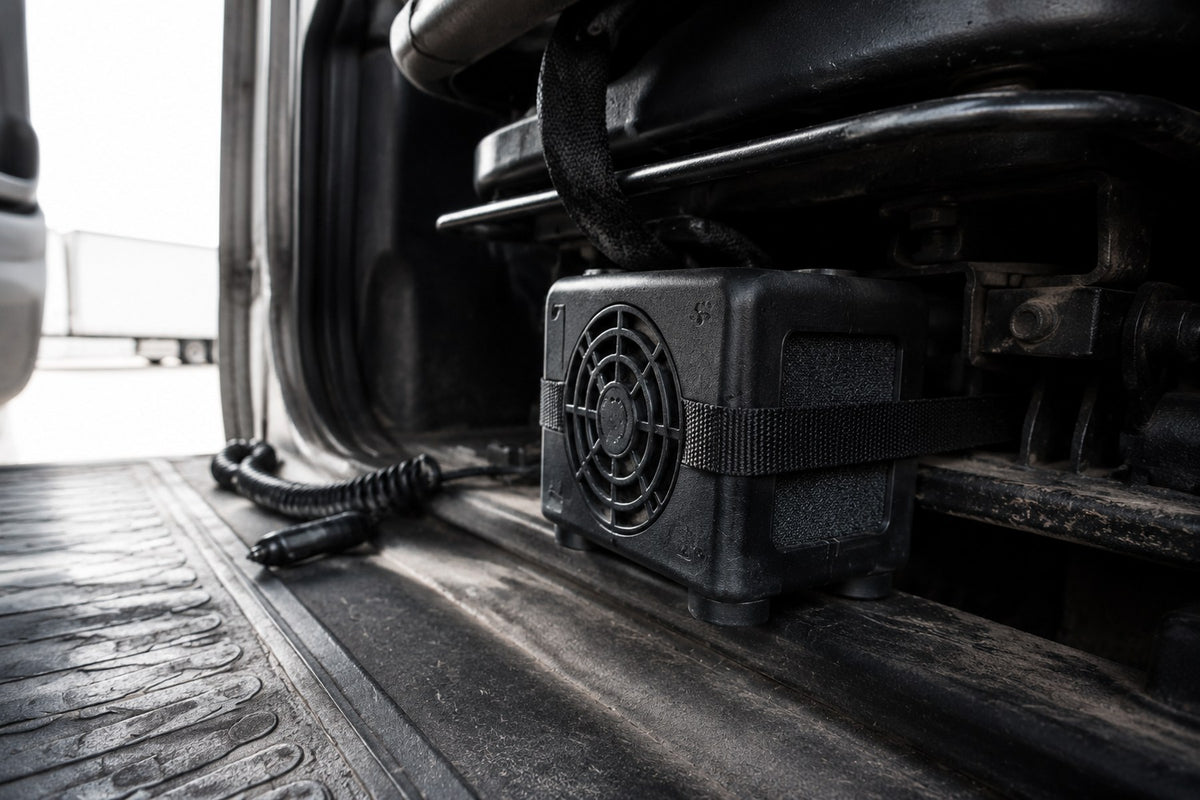
The heavy hardware never touches the cushion. The thermoelectric core, the blower and the heatsink all live in a module strapped under the seat. That is what keeps the cushion 40 mm thin, silent under you, and free of anything that vibrates.
The exhaust points away from the intake. A cooler that re-breathes its own hot air stops working within minutes. Opposite faces, so it does not.
It works with the engine off. Eco draws 0.8 A. That is the whole point of a 12 V system rather than one that depends on the cab air conditioning, and it is why idling to stay cool stops being the only option.
There is no liquid anywhere in the seat. Water earns its complexity when the cold source and the cooled surface are far apart. Eighteen inches is not far apart, and a pressurised bladder under a 300 lb driver is a risk worth deleting rather than engineering around.
Built for the ones who cannot get out of the seat
Different trucks, same problem. Dash air blows at your face and your chest. You are the one part of the cab the A/C never reaches.
OTR long-haul
Eleven hours down and your shirt is still dry. Chilled air at the skin, not a fan pushing cab heat around.

Owner-operator
Stop burning fuel to stay cool. Sixty-five watts on MAX, with nothing running under the hood.
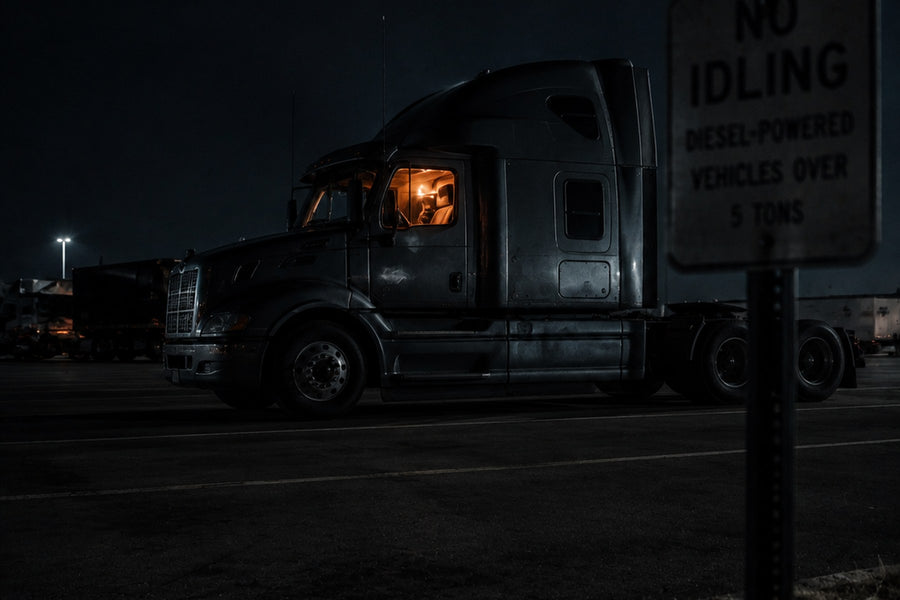
No-idle lanes
Engine off, seat still cold. A full night in ECO costs 6.4 amp-hours and leaves you a start in the morning.
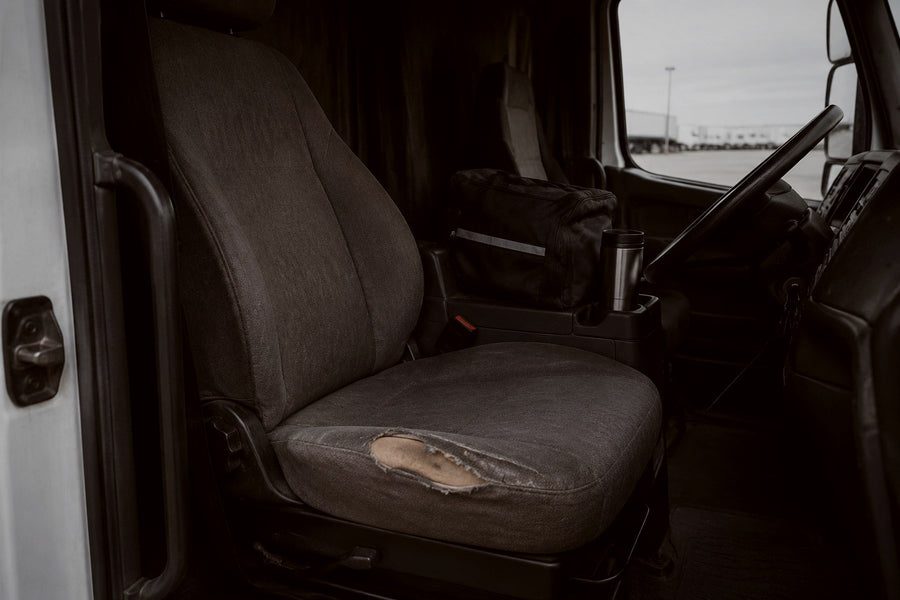
Company driver
The seat was assigned to you. This was not. It comes off the pedestal and moves to your next truck.
A closer look
Eleven hours of driving inside a fourteen hour clock. That is the seat DriverCool was designed around. Every layer, every millimeter, and one decision that changes the whole thing: the machinery doesn't sit under you.
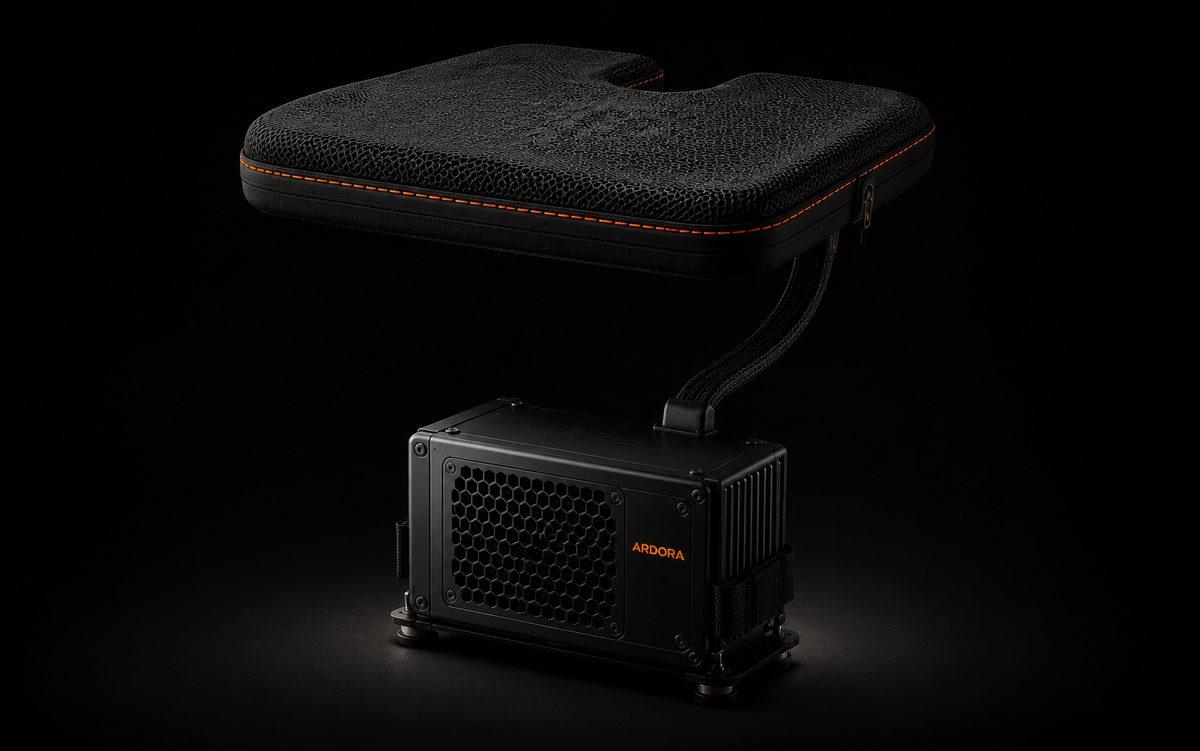
The architecture
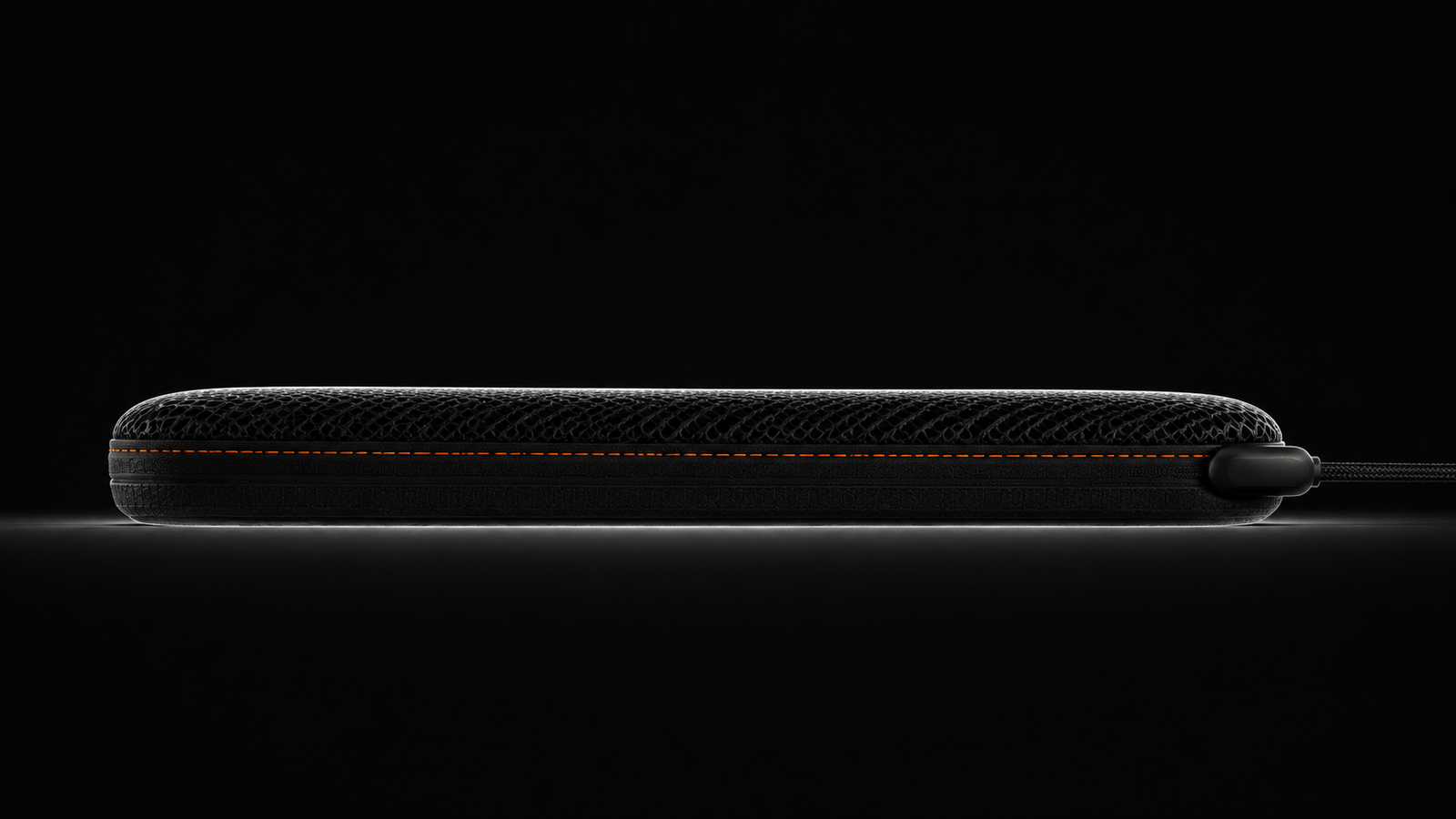
Most cooling cushions bury the fans inside the pad you sit on. You feel the hardware, you hear it, and you sit on the lumps. DriverCool splits the system in two. A thin five layer cushion on the seat, and the cooling module strapped out of sight underneath it. One flat duct joins them. Nothing mechanical under your body.
Two part system . cushion plus under seat module
Profile
Most cushions fix one problem by creating a worse one. Lift a driver too far and the wheel, the mirrors and the belt all sit wrong, and that is the reason cushions get sent back. DriverCool adds 40 mm, and nothing about your seating position has to change.
40 mm total build

Internal construction
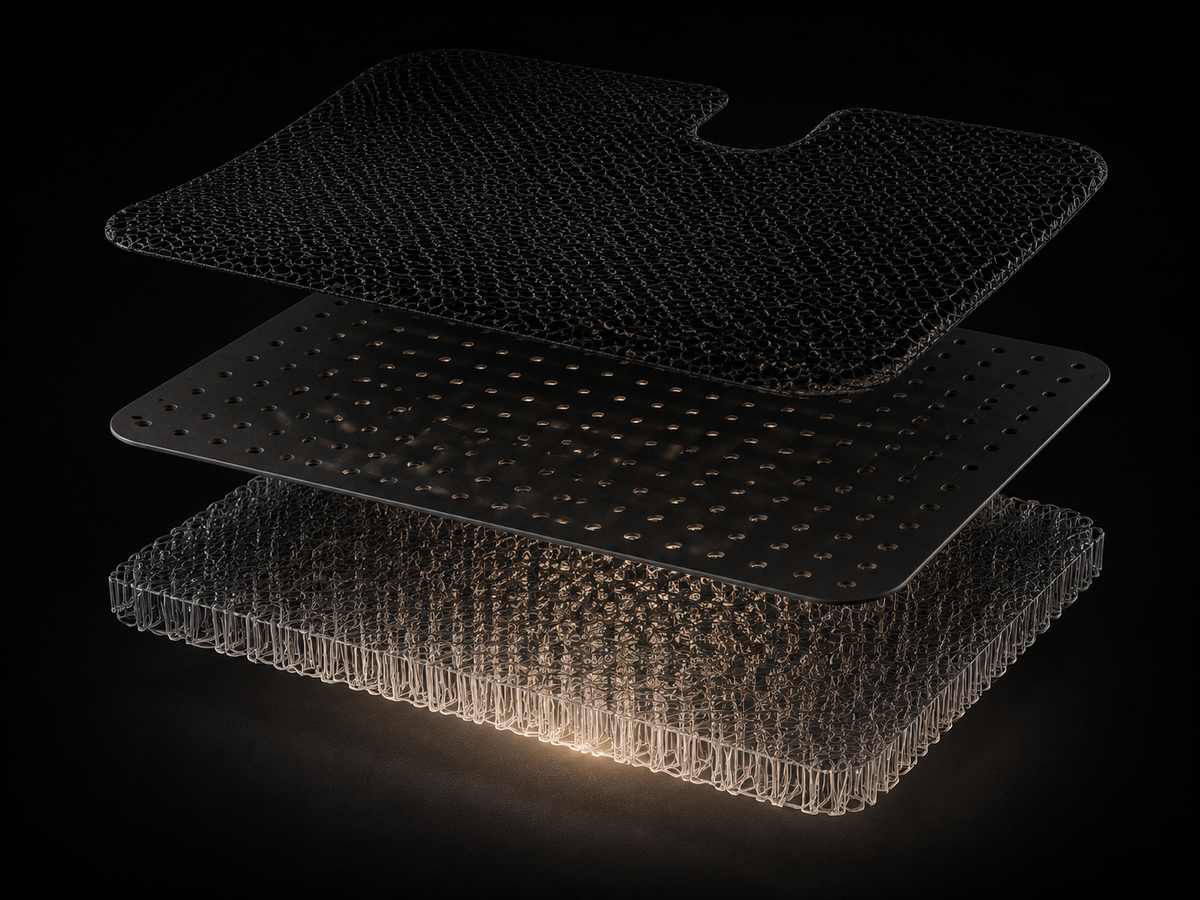
Air arrives from underneath, spreads sideways, and leaves through the mesh at your skin. The order of the layers is the whole product.
Layer 04 . Support
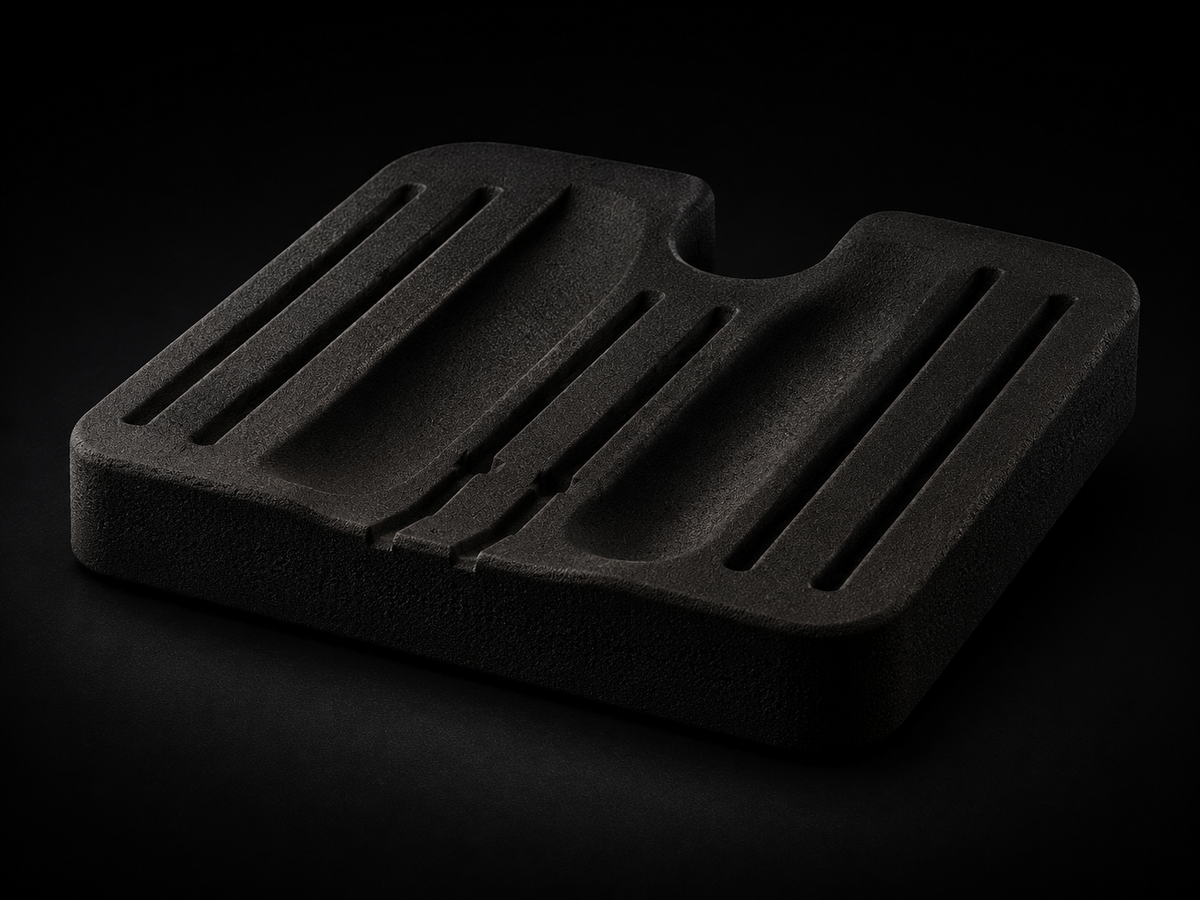
Cheap foam feels right at 6 a.m. and feels like a folded towel by 4 p.m. High resilience foam is chosen for one property. It springs back. Under continuous load it holds its height instead of packing down through the day, so hour eleven sits like hour one.
28 mm high resilience foam core
Layers 02 and 03 . Airflow
Air arriving through a single duct wants to stay where it lands. Two layers stop that. The perforated diffuser film spreads the stream sideways across the surface, and the warp knit spacer holds a 6 mm channel open beneath you so the air keeps moving even with your weight on it.
1.5 mm diffuser film plus 6 mm warp knit spacer

Airflow zoning
Contact pressure is not even across a seat, so the airflow is not either. Each zone is sized from contact pressure and sweat rate rather than split five equal ways. Five equal channels would make zoning a drawing rather than a feature.
Layer 01 . The surface
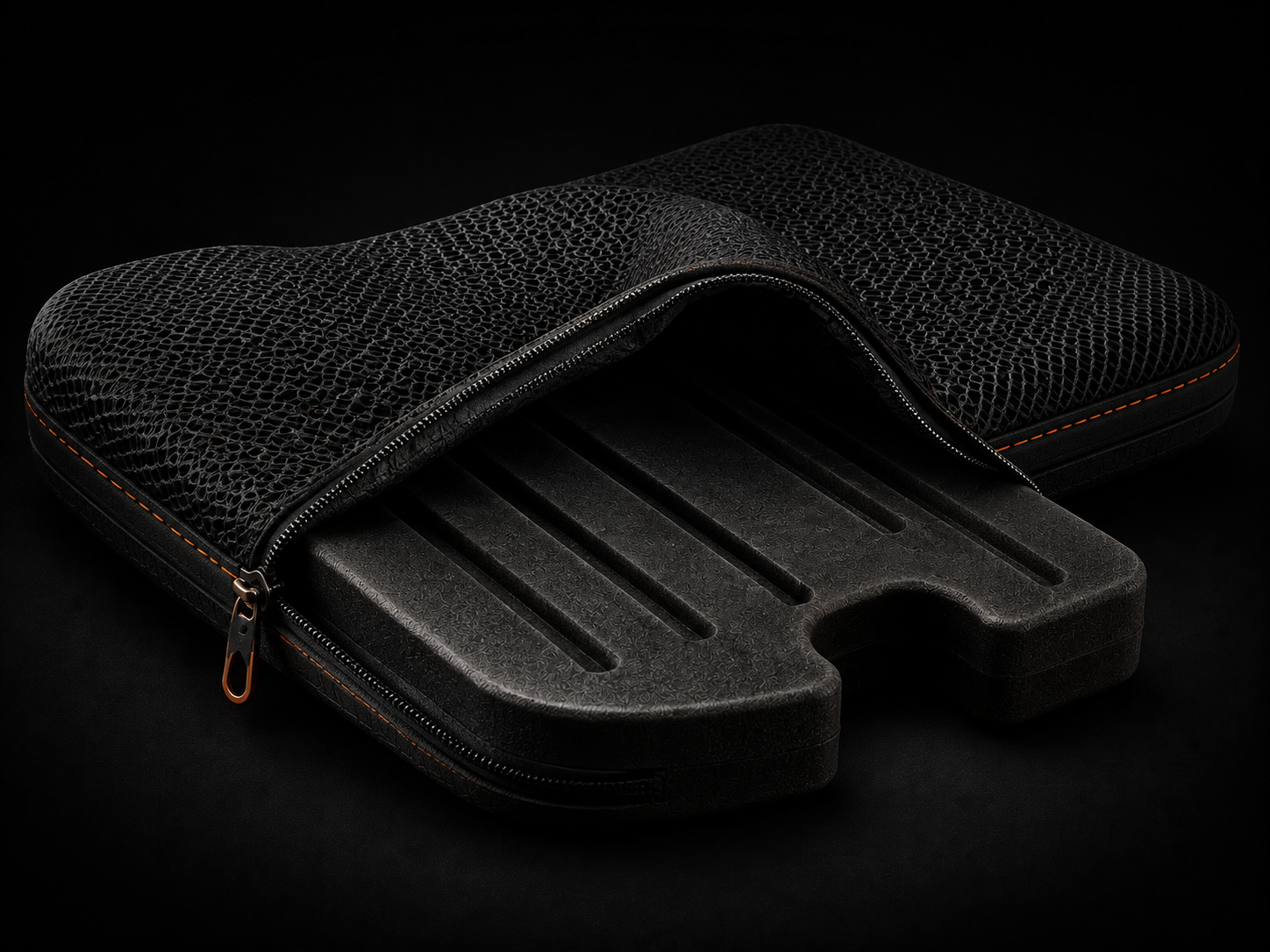
The 3 mm open knit spacer mesh is the only thing between you and the airflow, so it is woven to pass air rather than trap it. Ten hours a day for a year does what it does, so the layer that actually touches you unzips off and goes in the wash.
3 mm zip off spacer mesh cover
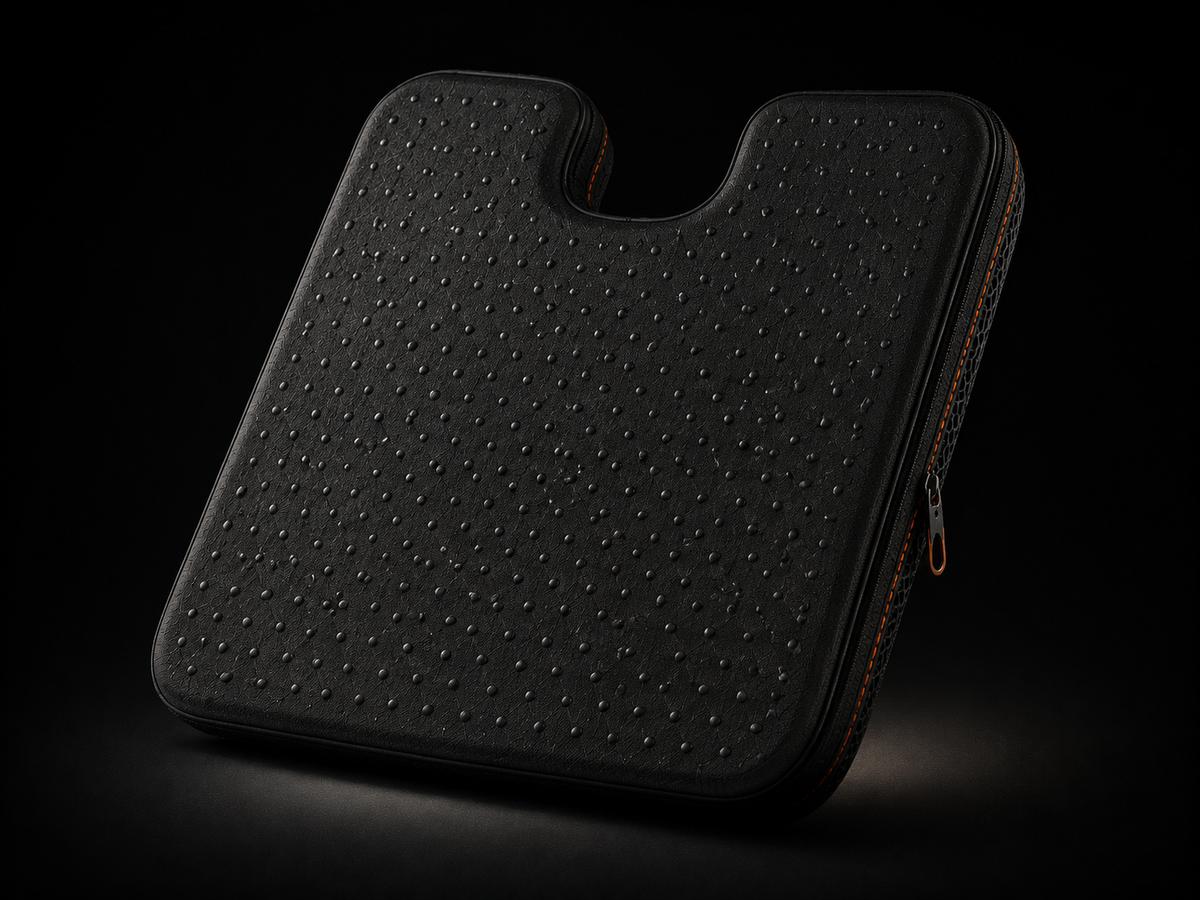
Layer 05 . Grip
Work pants, boots, and a hundred slides in and out of the cab walk an ordinary cushion forward all day. The woven base is dotted with silicone grip points that bite into the seat fabric, so you are not reaching back to straighten it at every stop.
1.5 mm woven base with silicone grip dots

Active cooling
This is the reason the cushion can be 40 mm thin and completely silent. Every motor, fan and heatsink is down here. The module draws cabin air through a washable filter, chills it, and sends it up the duct, exhausting heat on the opposite face so the intake never re breathes its own hot air.
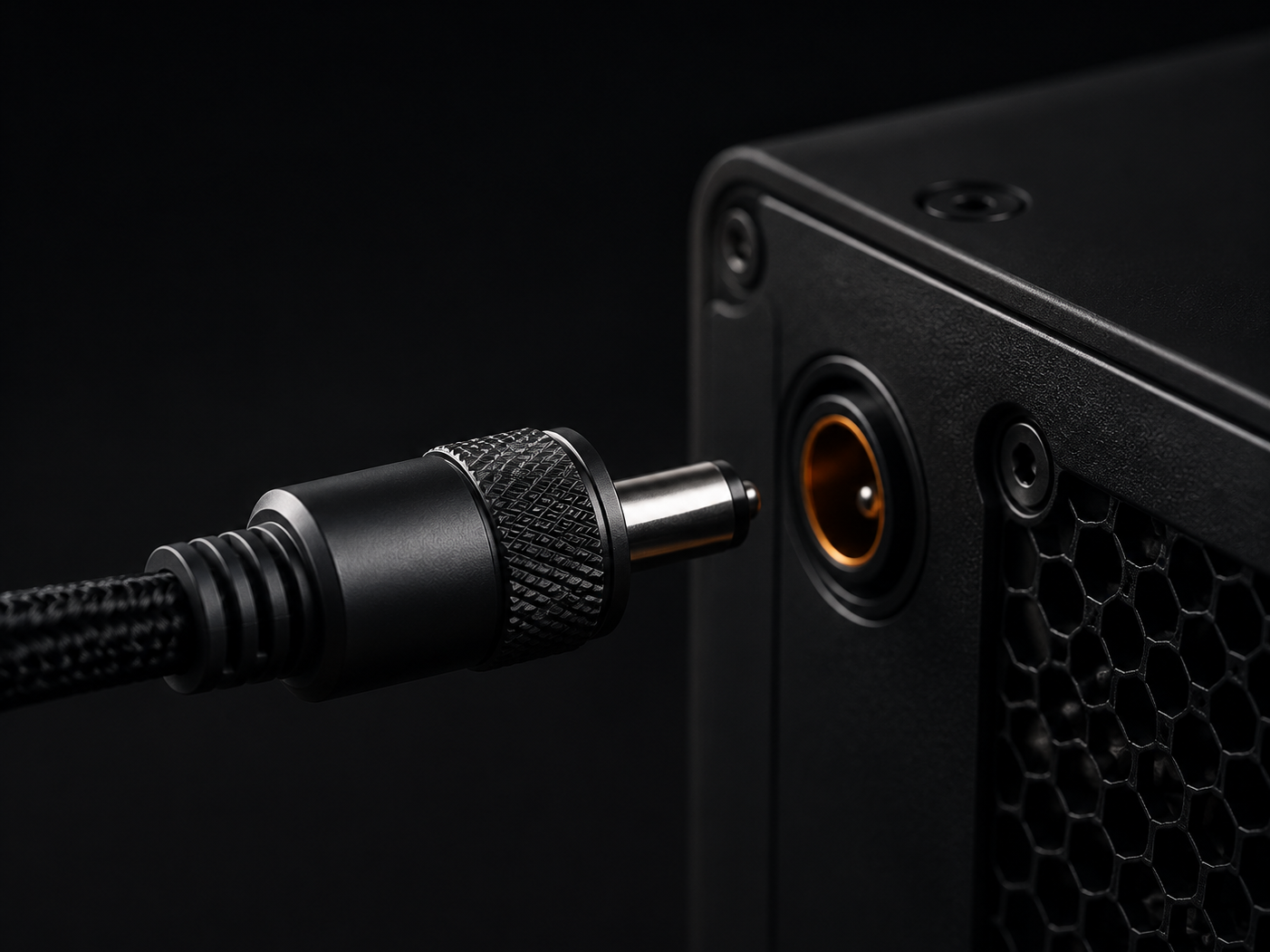
Power
One lead into a standard vehicle socket and the system is live, on a 12 V North American truck or a 24 V European one. It runs with the engine off, and the controller cuts out at 12.0 V and waits for 12.6 V before restarting, so you always have a start in the morning.
9 to 32 V DC . runs engine off
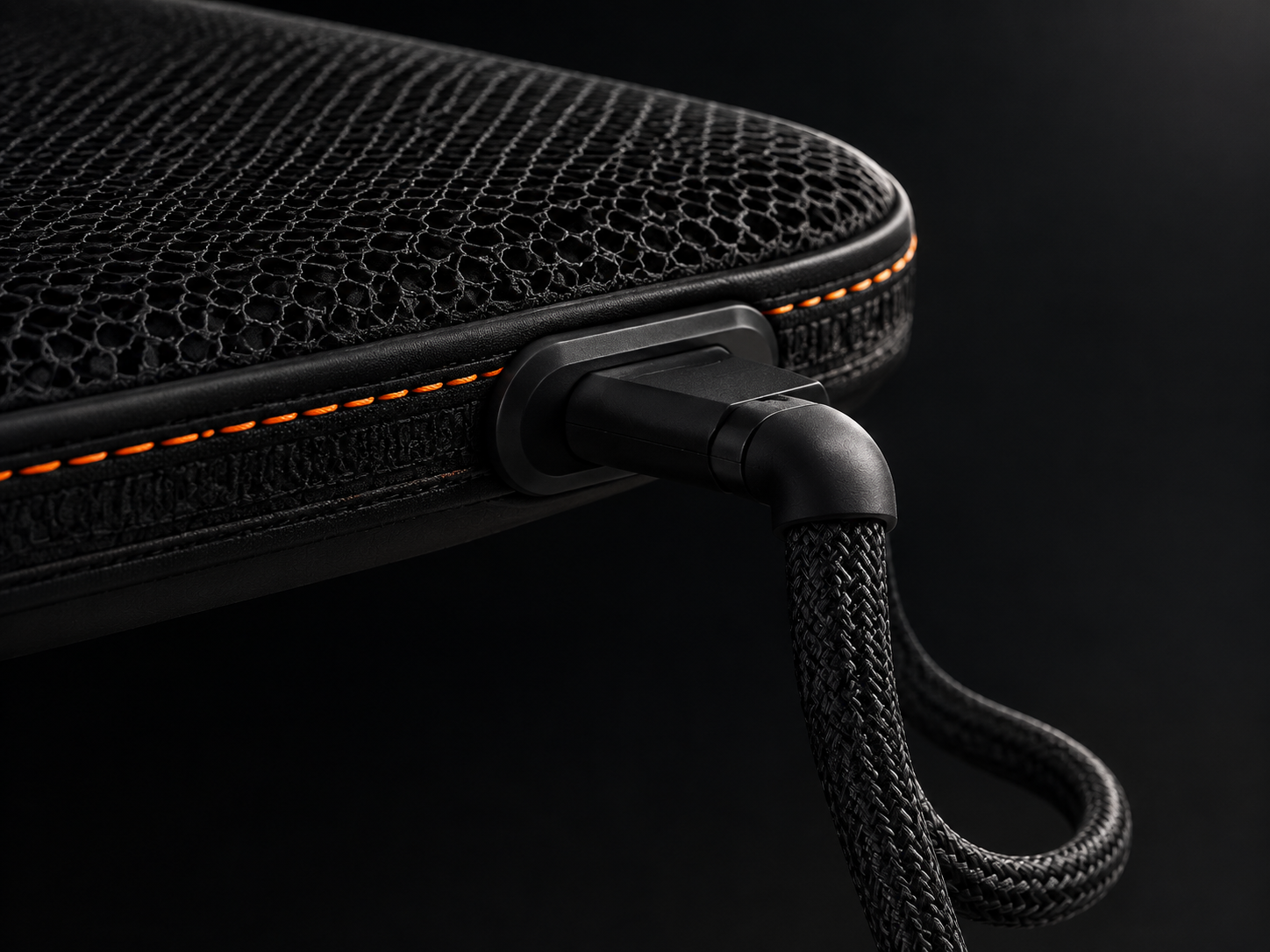
Connection
A duct in the wrong place is the part that fails first. This one leaves the cushion through a 40 x 15 mm flat oval port at the rear edge, turns down through a 90 degree elbow and drops away behind the seat, where nothing stands on it and nothing catches it.
40 x 15 mm flat oval rear port
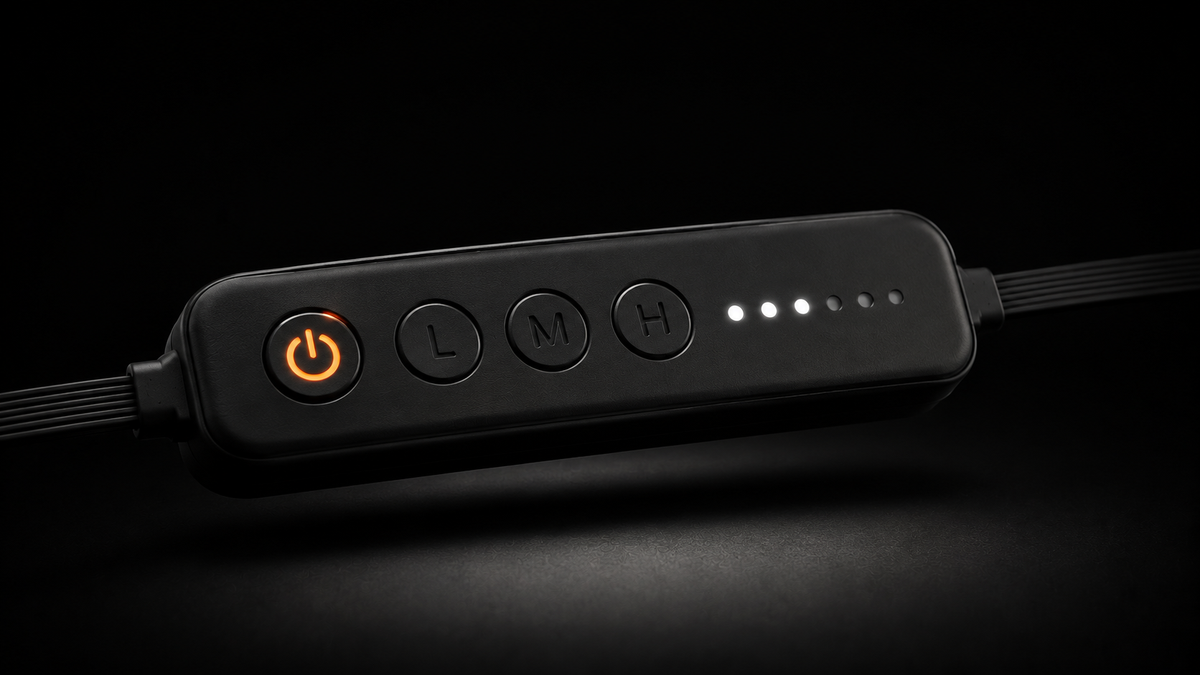
Control
Power, Low, Medium, High. No app, no pairing, no menu to read while the road is moving. LED indicators show the level at a glance, and the buttons stand proud enough to find with gloves on, by feel alone.
Power . Low . Medium . High

Installation
Nothing is drilled, nothing is spliced, and nothing is permanent. If you change trucks, it changes with you.

What's in the box
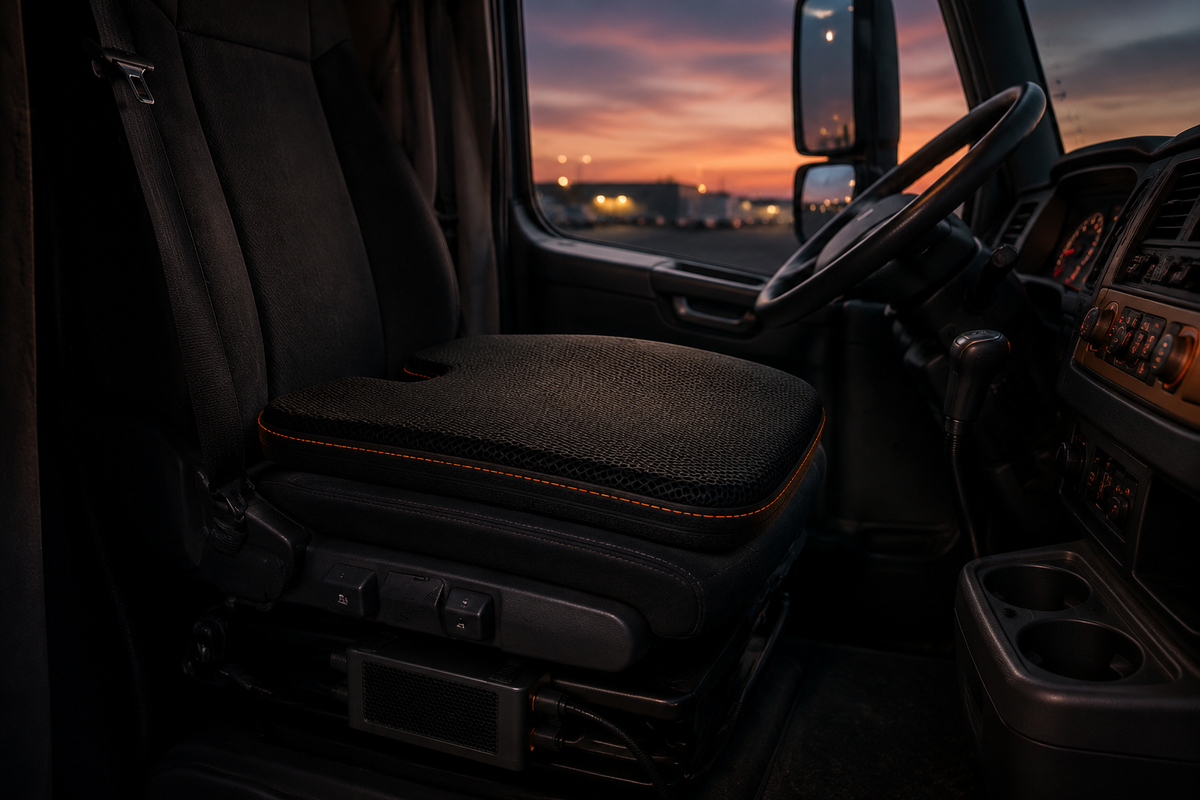
In the cab
Full specifications, including temperature drop, power draw, airflow and noise, are listed in the specifications section below. Any figure still marked there as a design target rather than a measured result is labelled as one.
Every number below is one you can hold us to
Temperature drop●
Up to 10 C / 18 F below cab air
On MAX. Roughly 5 C on COOL.
Power draw
ECO 0.8 A . COOL 3.0 A . MAX 5.4 A
10 W, 36 W and 65 W respectively.
Overnight cost
6.4 Ah for a full night in ECO
43 Ah if you run MAX for eight hours.
Noise●
About 30 dB below cab noise at 55 mph
Inaudible while driving. You will hear it parked with the engine off.
Airflow at the cushion●
6 to 8 CFM delivered
Measured after duct and cushion restriction, not free air.
Voltage
9 to 32 V DC
12 V and 24 V trucks, North America and Europe.
Battery protection
Cuts out at 12.0 V, restarts at 12.6 V
Cushion height
40 mm / 1.6 in
Low enough to keep your wheel, mirror and belt geometry.
Module
2.5 kg / 5.5 lb, straps to the seat frame
No drilling. Rides on the seat frame so it moves with you through full air-suspension travel.
Minimum air temperature
Never below 18 C / 64 F
Hard limit. Cold contact under body pressure restricts blood flow.
Cover
Zip-off, machine washable
Intake filter
Washable, tool-free access
Cabs are dusty. This is the one thing you have to maintain.
Cushion size
450 x 420 mm / 17.7 x 16.5 in
Sized for a class-8 seat pan. No overhang at the sides.
Humid climates
Cooling backs off in high humidity
At 32 C and 80 percent RH there is under 4 K of headroom before condensation. Gulf Coast summers are where this works least well.
Returns
60 day trial
Run it for two months. If it is not for you, send it back.
Nothing spins inside the cushion
Every fan and blower lives in the module under your seat. The thing you actually sit on has no moving parts, no motor and no vibration of its own. That is the whole reason the air is ducted in rather than generated where you sit.
It will not strand you
The controller watches your bus voltage and shuts itself off at 12.0 V, then waits for 12.6 V before restarting. A cushion that leaves a driver with a dead battery at four in the morning is worthless, whatever else it does. So it refuses to be that.
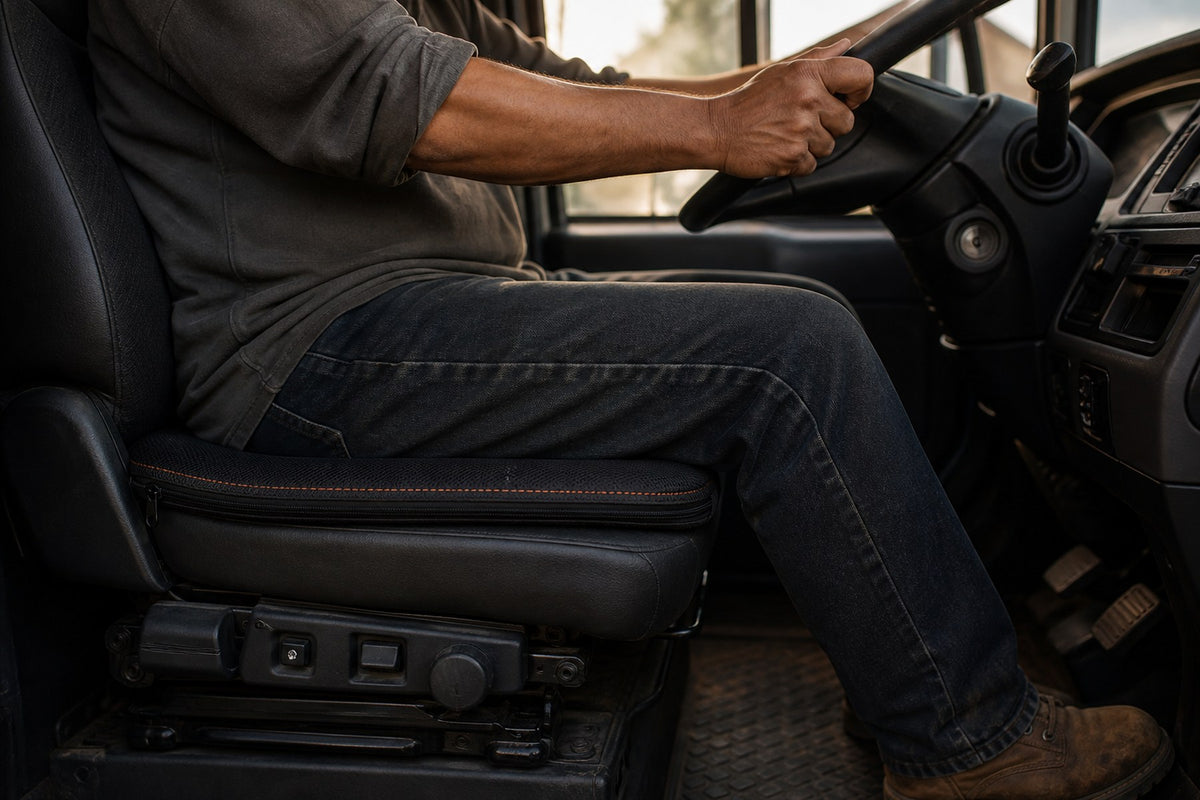
It does not lift you out of your seat
Forty millimetres. Your wheel, your mirrors and your belt stay exactly where you set them. Most cushions fix one problem by creating a worse one, and sitting too high is the reason drivers send them back.
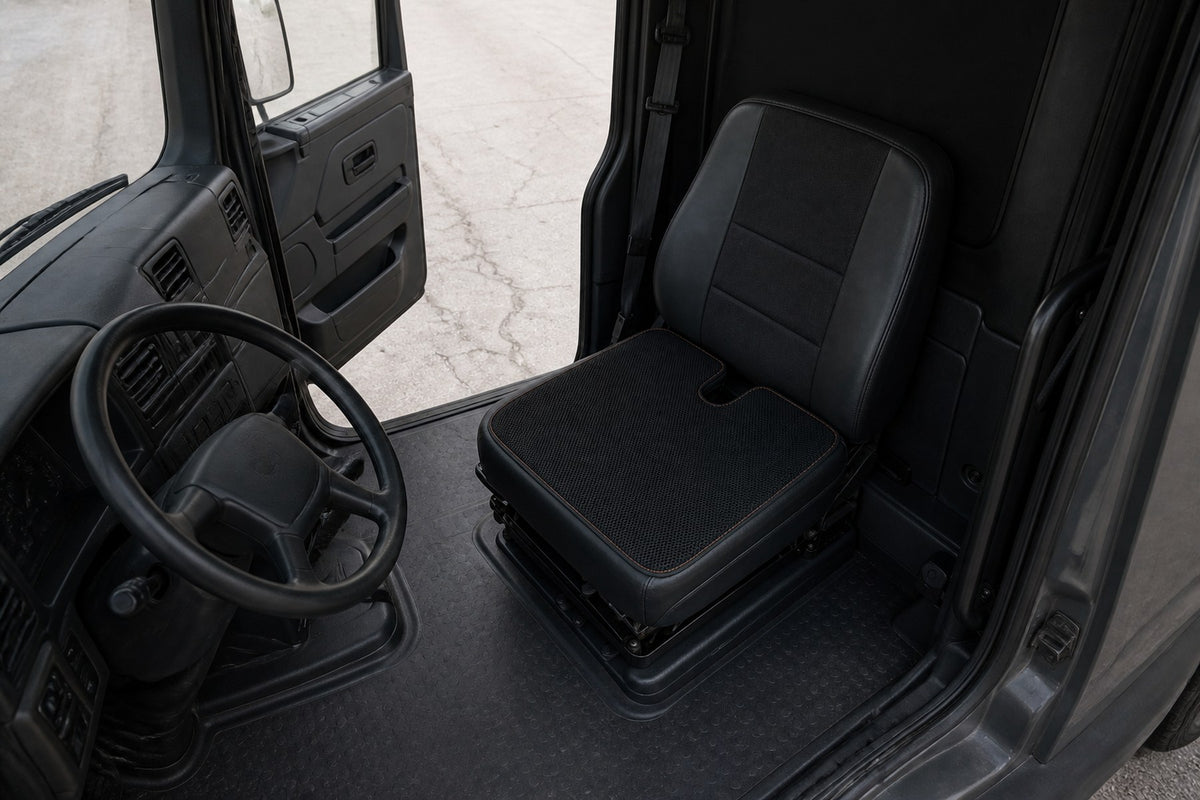
It covers the whole seat
450 by 420 mm, sized for a class-8 seat pan. No overhang at the sides, no gap at the back, and the tailbone cutout lands where it should.
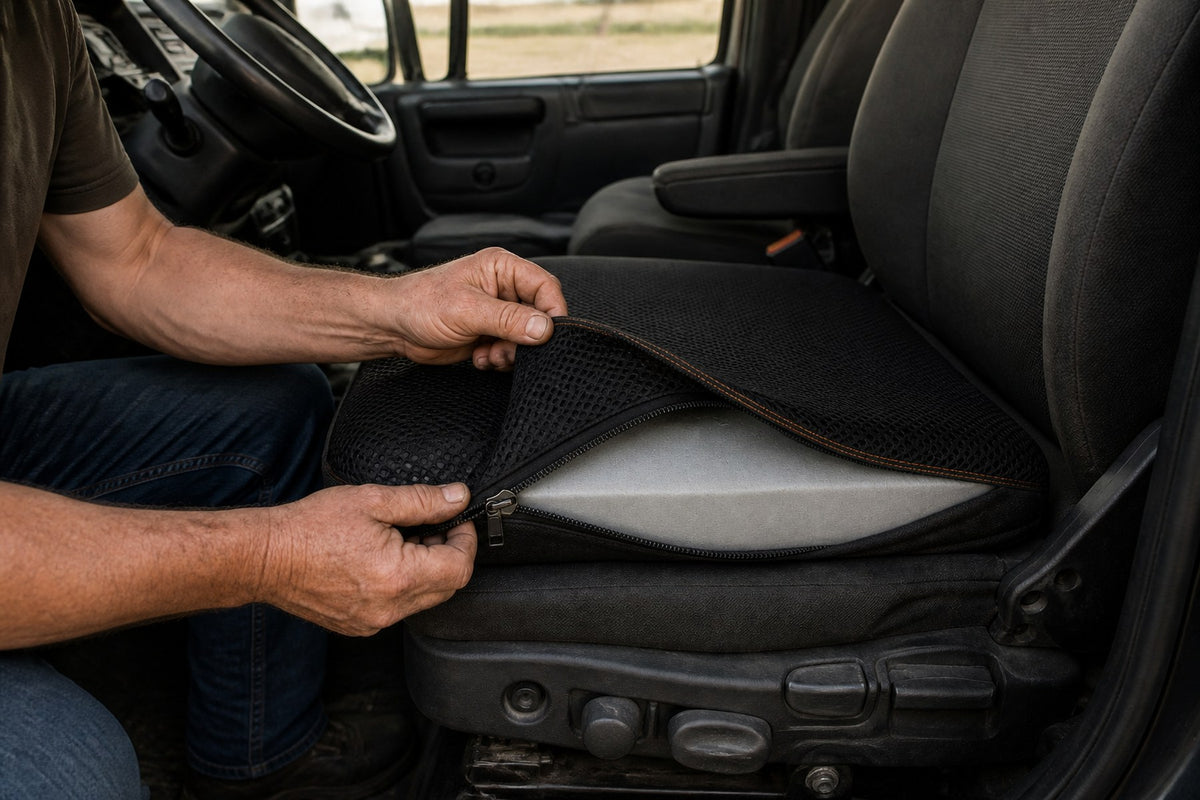
The cover comes off and goes in the wash
Full length zip around the edge. Ten hours a day for a year does what it does, so the layer that actually touches you is the layer you can clean.
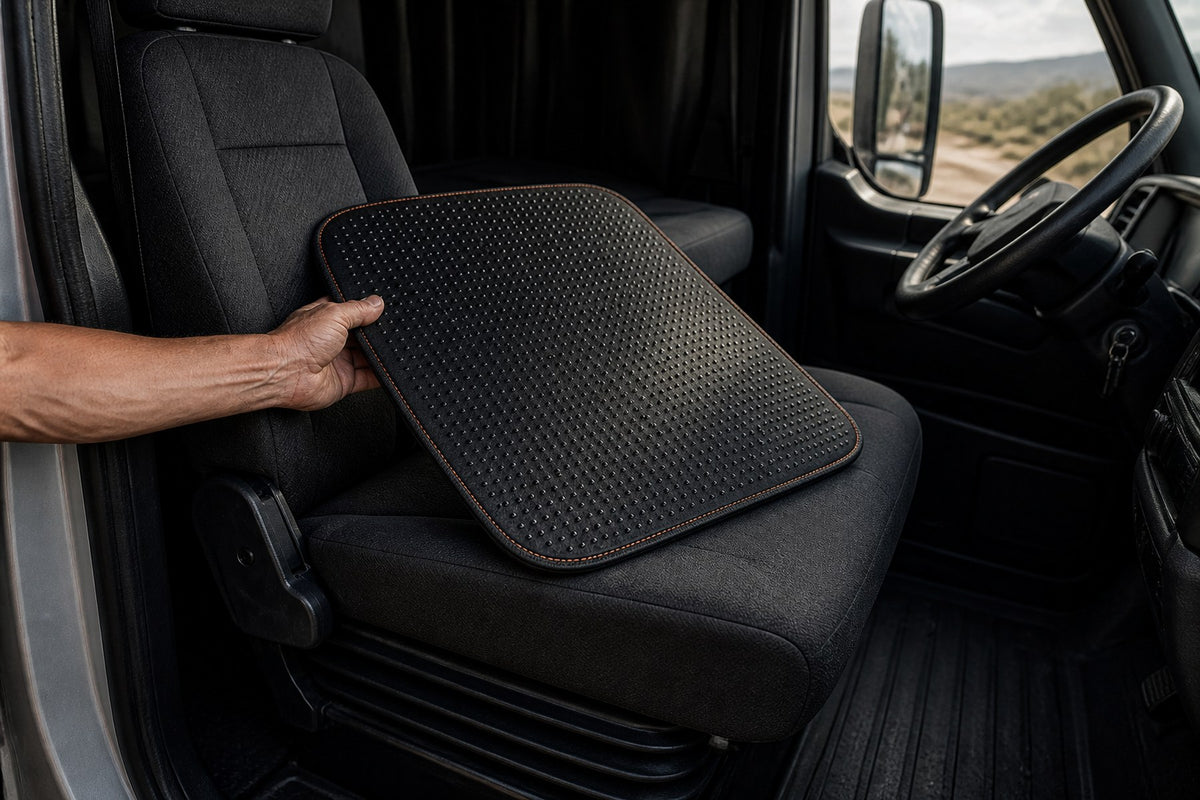
It stays where you put it
Silicone grip dots across the entire backing. No straps to fight with, and it will not creep forward every time you come off the brake.
Figures marked with a dot are engineering design targets from our Rev B thermal review, not measured production results. We publish them because we would rather show you the target than hide it. They get replaced with bench and road data as it is gathered, and the page updates when they do.
Where this sits
Staying cool in a cab with the engine off is not a new problem. It is just that every existing answer is at one end of the price range or the other, and there has been nothing sensible in the middle.
Ventilated cushion
A fan in a pad. It moves cab air across you without cooling it first, so at 32 degrees it is blowing 32 degree air at your back.
DriverCoolThe gap nobody filled
Chills and dries the air before it reaches you, at the seat surface, on 12 V with the engine off. Installs in minutes with no drilling and comes out just as fast.
Bunk air conditioner
Genuinely cools, and cools the whole bunk. It is also a serious install, a serious battery draw, and it is not cooling you while you drive.
APU
The complete answer, and priced like one. Most drivers who want to stop idling to stay cool are never going to spend this to get there.
Competitor prices are typical market ranges for these categories, not quotes for a specific model. We list them because the honest argument for DriverCool is the gap between them, not a claim that it replaces an APU.
From the cab
No reviews yet.
Reviews appear here as they come in. We do not write them and we do not edit them.
Straight answers
Eco mode draws 0.8 A, about 10 watts. That is roughly what a couple of LED dome lights pull, and it is the mode built for sleeping and for long stretches with the engine off.
Maximum is 5.4 A, about 65 watts. That is the setting for pulling a hot cab down fast, not the one you leave it on all night.
Yes. It runs off 12 V and does not depend on the cab air conditioning or the engine running. That is the entire reason it exists, and it is why the power budget was designed around eco mode rather than maximum.
It suits both 12 V and 24 V trucks, with a working range of 9 to 32 V DC.
Slightly, and we would rather say so. DriverCool moves heat from you into the air, and that heat leaves through the exhaust on the module. In a sealed cab, the net air temperature rises by roughly the power the unit is drawing.
The trade is deliberate. The cooling lands at your skin, where it changes how the shift feels, while the heat it displaces is spread thinly through the whole cab volume. Cooling the person is a far cheaper problem than cooling the room, which is exactly why a bunk air conditioner costs what it costs.
The target is inaudible at highway speed and well below the normal noise floor of a cab. The blower and the heatsink fan both sit inside the under seat module, on vibration isolators, rather than in the cushion under you.
This is an engineering target, not a measured figure. The tested number gets published here after road validation.
The cushion is 40 mm and compresses slightly under load. Nothing else sits on the seat, because the module is underneath it, so the only thing between you and the seat pan is a thin pad.
If you already run a seat cushion, this replaces it rather than stacking on top of it.
Chilling air also dries it, which is most of why it feels good. The water that comes out of the air is wicked to the hot side of the module and evaporated away, so it does not pool and it does not reach the cushion.
In very humid air the unit does more of its work drying and less of it chilling, so the temperature drop at the surface is smaller than it would be in dry heat. The comfort gain often holds up anyway, because the sweat can finally leave.
No drilling, no cutting, nothing permanent. The module straps to the seat pedestal and the cushion sits on the seat pan. It comes out as cleanly as it went in when you change trucks.
The duct has a service loop cut long enough for the full travel of an air suspension seat, so it does not tug at the top of a bounce.
DriverCool ships now. It sold on Amazon before we moved direct. Reviews open on this page as orders land here, and we are not going to write any in the meantime.
The catch is that the airflow, temperature drop and noise figures here are still engineering targets and are labelled as such. Drivers telling us it works is not the same as a measured number. When the bench and road data exists it gets published on this page whether or not it flatters us.
The 60 day trial is the part that protects you either way. Run it through a real stretch of hot weather and decide for yourself.
